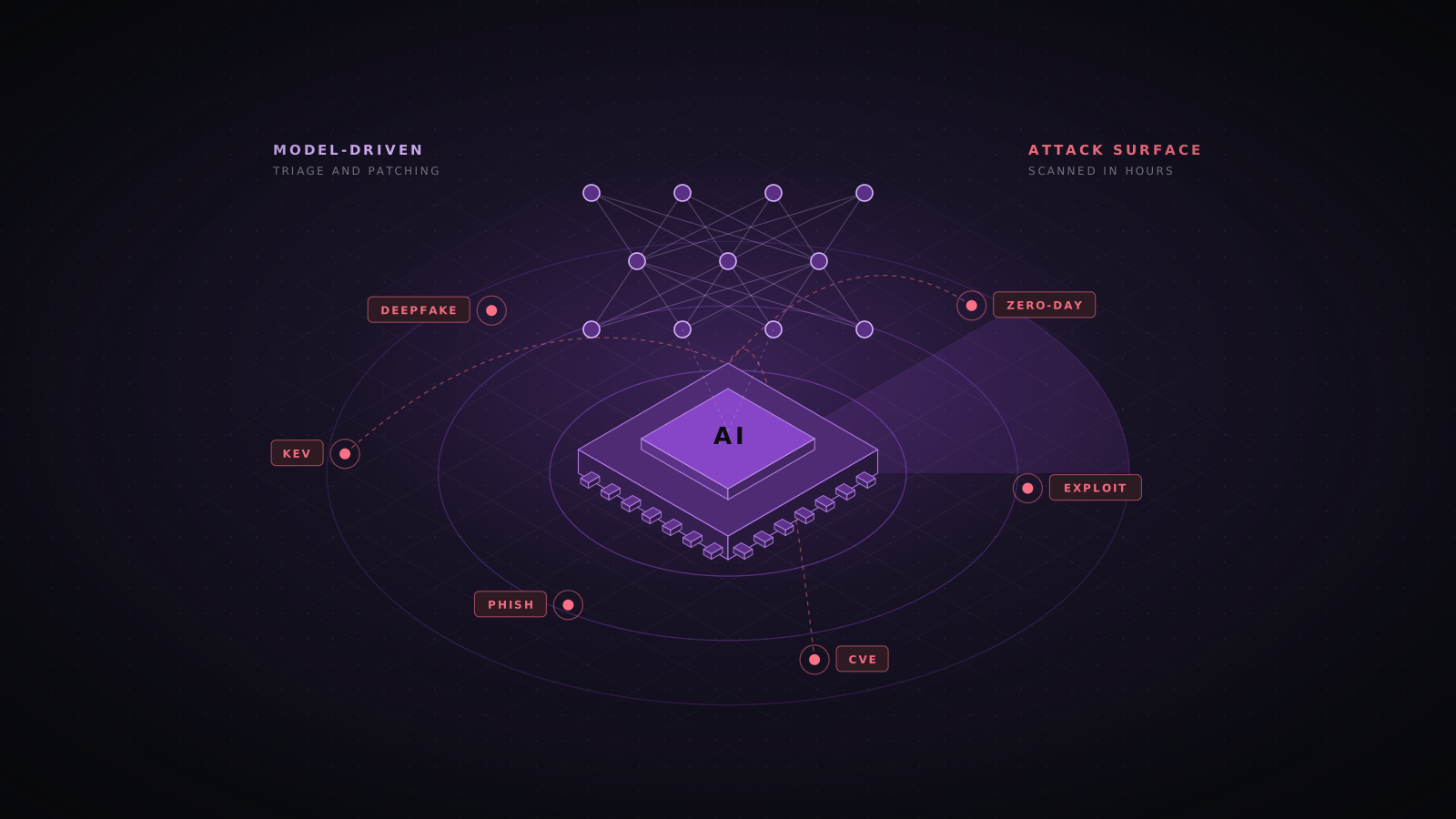
Two trends are colliding. Attackers now use AI to work faster and at greater scale, and the number of publicly disclosed vulnerabilities keeps climbing to tens of thousands of CVEs a year. Neither trend is new on its own. Together, they break the assumption that defenders have weeks to respond.
What AI changes for attackers
AI rarely invents new classes of attack. What it does is remove friction from the ones that already work.
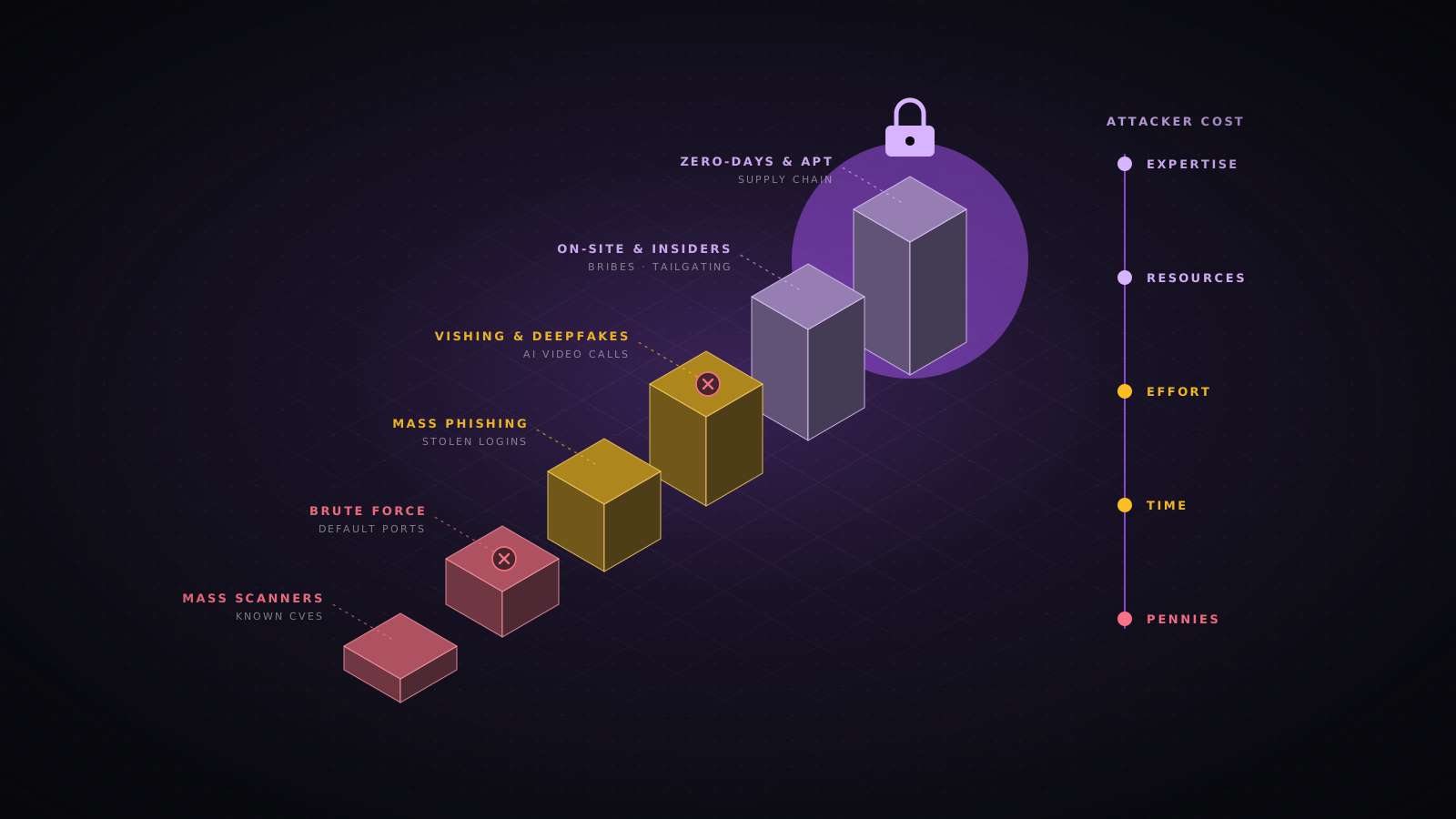
- Phishing at scale: fluent, personalized lures in any language, drafted in seconds and tuned to each target, erasing the spelling mistakes users were trained to spot.
- Faster reconnaissance: summarizing public code, job postings and leaked documents into an attack plan.
- Quicker exploit development: comparing a vendor patch with the previous version to locate the fixed flaw, then iterating on a working exploit.
- Synthetic voices and video: impersonating executives on a call to approve a payment or reset a password.
The practical effect is compressed timelines. The gap between a vulnerability being published and being exploited has been shrinking for years, and AI assistance pushes it further. Patch cycles measured in months now leave the door open far too long.
The CVE firehose
No team can patch everything at once, and treating every "critical" CVSS score as an emergency leads to burnout and missed real threats. CVSS measures how severe a vulnerability could be, not how likely it is to be exploited or how much it matters in your environment. The current version, CVSS v4.0, adds more context, but severity alone is still the wrong sort key.
Prioritize by exploitation, not just severity
- CISA's Known Exploited Vulnerabilities (KEV) catalog lists vulnerabilities with evidence of exploitation in the wild. Anything on it that you run goes to the front of the queue.
- The Exploit Prediction Scoring System (EPSS), maintained by FIRST, estimates the probability that a CVE will be exploited in the near term. It separates the urgent few from the theoretical many.
- Asset context decides the rest: an internet-facing system holding customer data outranks an isolated test server with the same score.
Defending with AI, carefully
The same tools help defenders. AI can triage alerts, summarize incidents, flag anomalous behavior, explain unfamiliar code, and draft detection rules. The leverage is real, especially for small teams.
Use it as an analyst that needs supervision, not an oracle. Keep humans in the loop for containment decisions, validate generated detections against real data, and never paste secrets or customer data into tools that are not approved for it.
Your AI systems are attack surface too
Every chatbot, coding assistant and AI agent you deploy is a new kind of application with new failure modes. The OWASP Top 10 for Large Language Model Applications catalogs the most common risks.
- Prompt injection: instructions hidden in emails, web pages or documents that the model reads and obeys.
- Excessive agency: agents given broad tools and permissions that an attacker can steer.
- Sensitive data disclosure: models that leak what they were given in context or during training.
- Supply chain risk: third-party models, plugins and datasets that have not been vetted.
Treat model output as untrusted input. Give agents the narrowest permissions that work, require confirmation for consequential actions, and log what they do.
A practical playbook
- Maintain an accurate asset inventory and a software bill of materials (SBOM), so you know within minutes whether a new CVE affects you.
- Subscribe to the KEV catalog and EPSS scores, and wire them into your ticketing so exploited vulnerabilities jump the queue automatically.
- Set patch deadlines by exploitability and exposure, and measure how often you meet them.
- Deploy phishing-resistant MFA so that a perfect AI-written lure still cannot capture a usable credential.
- Verify payment and access requests out of band, using a known number or channel, never the one in the message.
- Inventory your AI integrations, threat-model them, and restrict what agents can do.
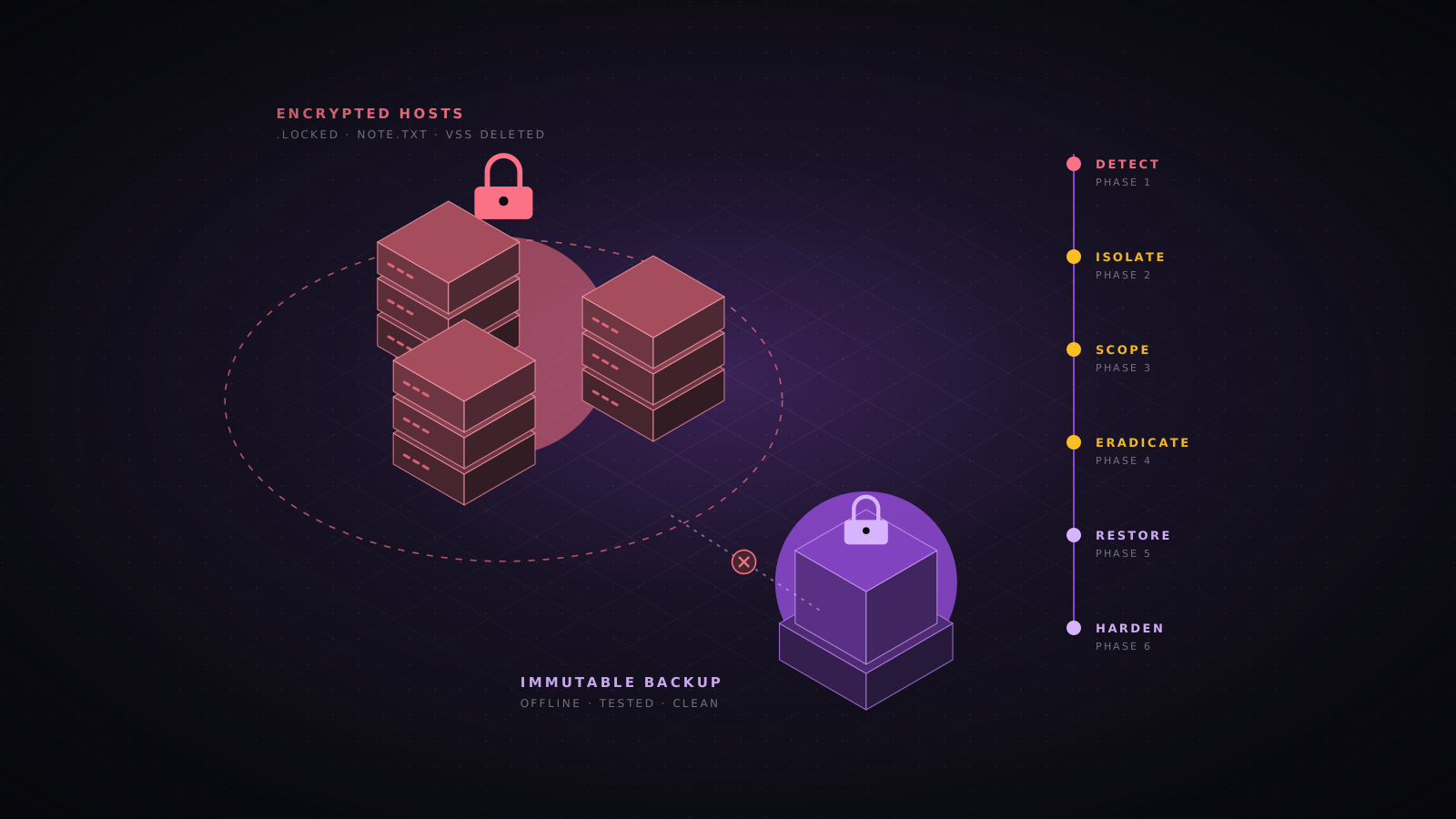
- Run a tabletop exercise around an AI-assisted attack: a deepfake executive call, or a mass-exploited edge device.
The fundamentals have not changed: know what you run, fix what is being exploited, make credentials hard to steal, and assume something will get through. What has changed is the speed. The teams that keep up are the ones that have automated the boring parts, so their people can focus on the decisions that matter.
- AI security
- Vulnerability management
- CVE
- Threat intelligence