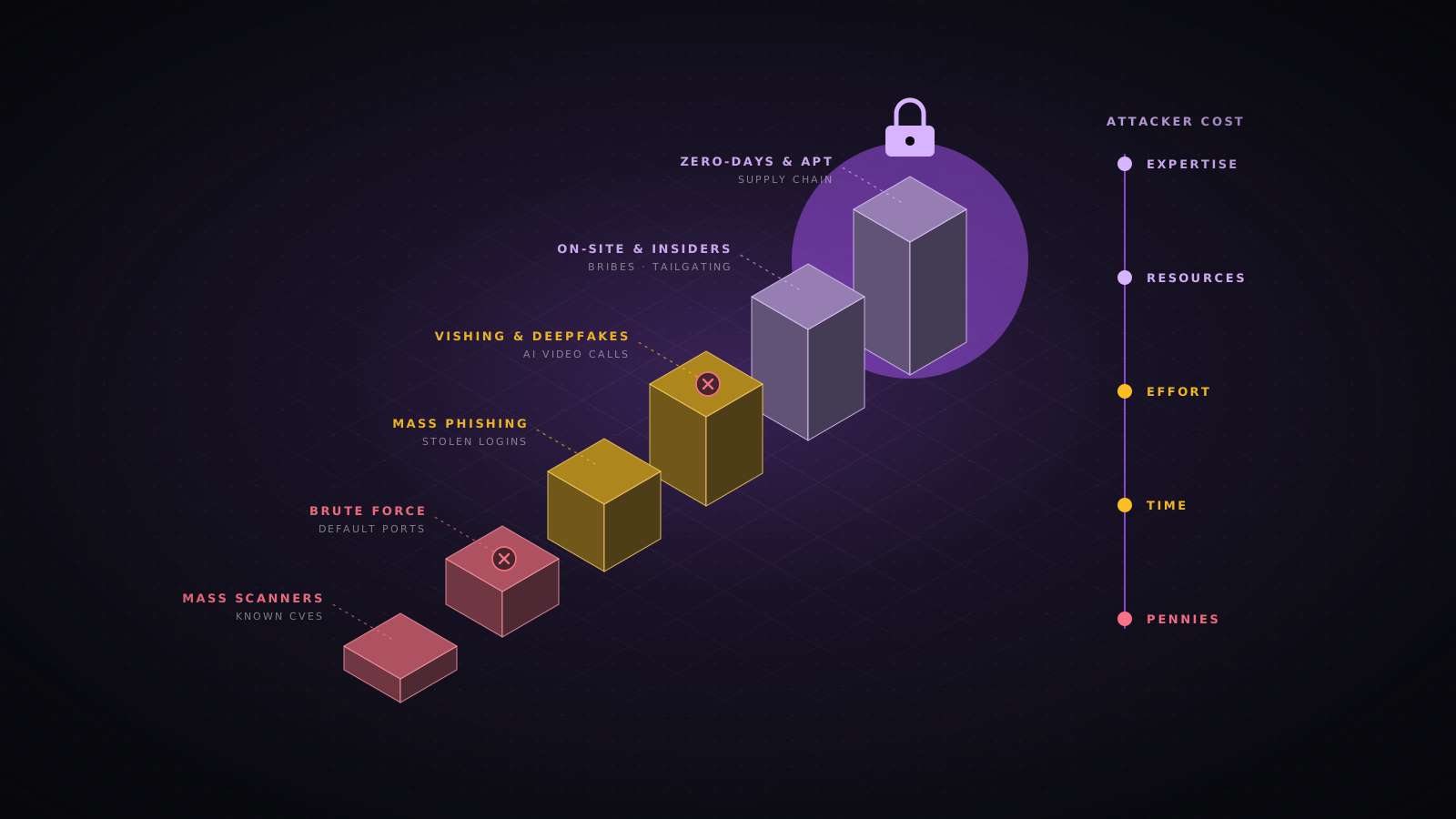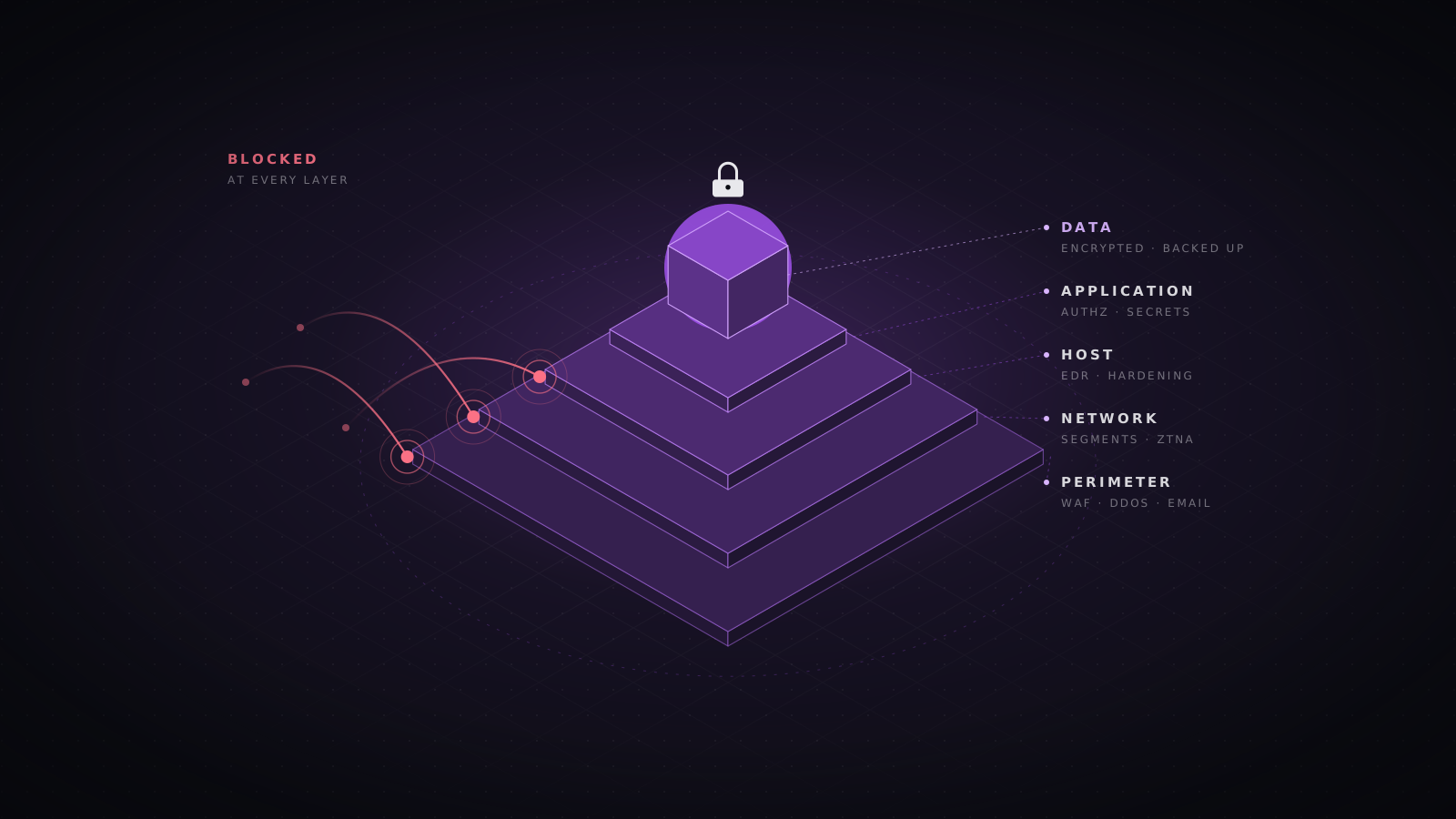
Every security control fails eventually. Firewalls get misconfigured, passwords get phished, and a zero-day appears in the one library nobody remembered was there. Defense in depth accepts that and plans around it: instead of betting everything on one barrier, you put several independent controls between an attacker and what matters, so one failure is an incident rather than a breach.
The single-wall fallacy
Many organisations still run a "hard shell, soft center" model: a strong perimeter and implicit trust inside it. The trouble is that the perimeter has dissolved. Staff work from home, workloads run in several clouds, and SaaS tools hold the most sensitive data. Once an attacker is through the front door, through a stolen session token, a vulnerable VPN appliance, or a compromised supplier, a flat internal network lets them move freely.
Defense in depth replaces the question "how do we keep attackers out?" with a more useful one: "when an attacker gets in, how many more things have to go wrong before they reach our data?"
The layers that matter
There is no canonical list, but a modern stack usually needs controls at each of these levels. The goal is not to buy a product per layer; it is to make sure no single layer is carrying the whole load.
Identity
Identity is now the primary perimeter. Phishing-resistant multi-factor authentication (FIDO2 security keys or passkeys), short-lived sessions, and least-privilege roles do more to stop real-world intrusions than almost any network control. Treat administrative identities as a separate, tightly guarded tier.
Network
Segment by sensitivity, not by convenience. Production should not be reachable from the office Wi-Fi, and a compromised web server should not be able to open a connection to the database of an unrelated service. Default-deny egress rules quietly defeat a large share of command-and-control and data-exfiltration techniques.
Endpoint and host
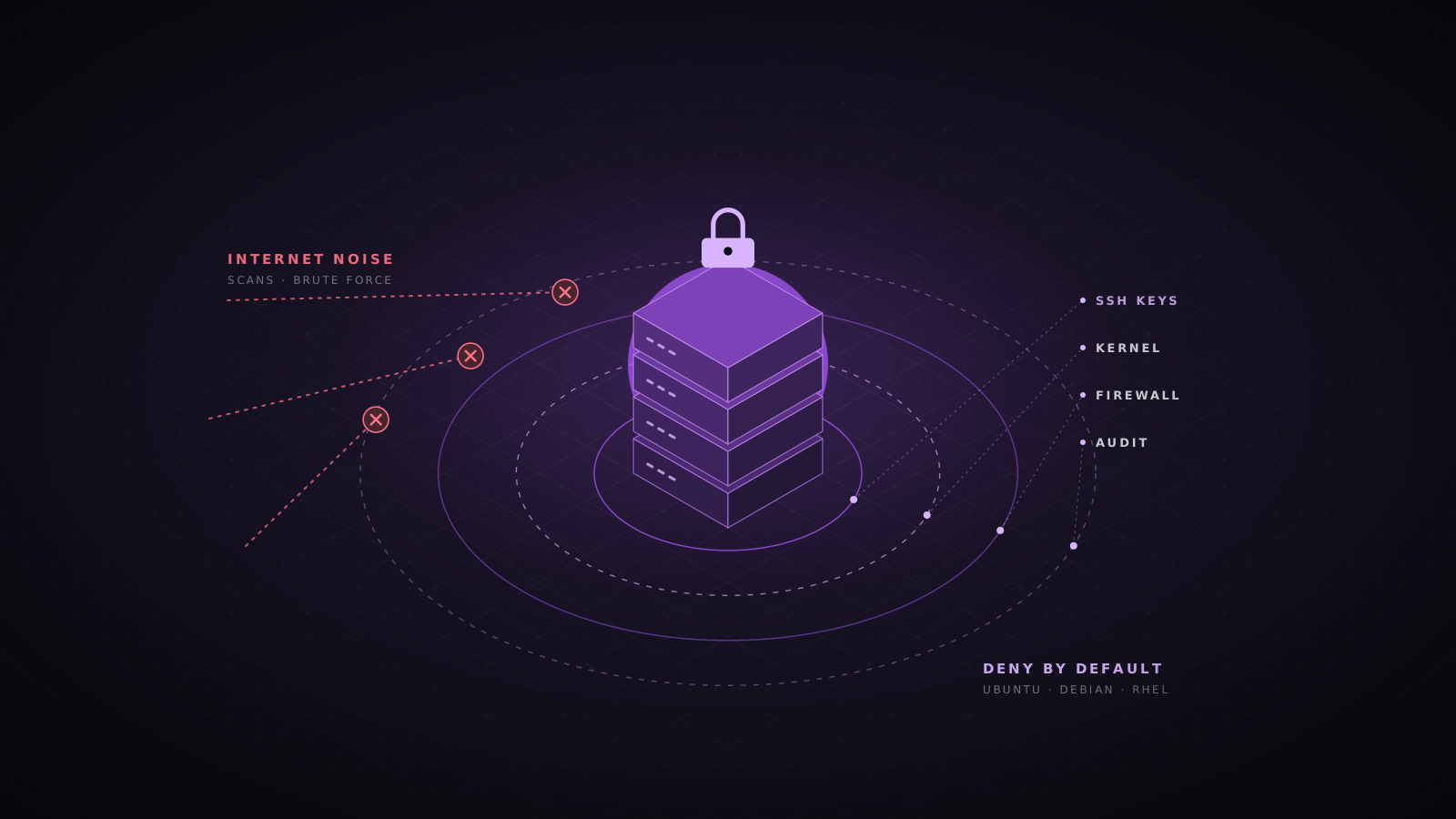
Harden images, remove what you do not run, patch on a schedule tied to exploitability, and deploy endpoint detection and response that someone actually watches. On servers, immutable infrastructure and minimal base images shrink what an attacker can live off.
Application
Validate input at every boundary, parameterize every query, enforce authorization on the server for every object, and keep dependencies current. Security review and automated testing in the pipeline catch whole classes of bugs before they ship.
Data
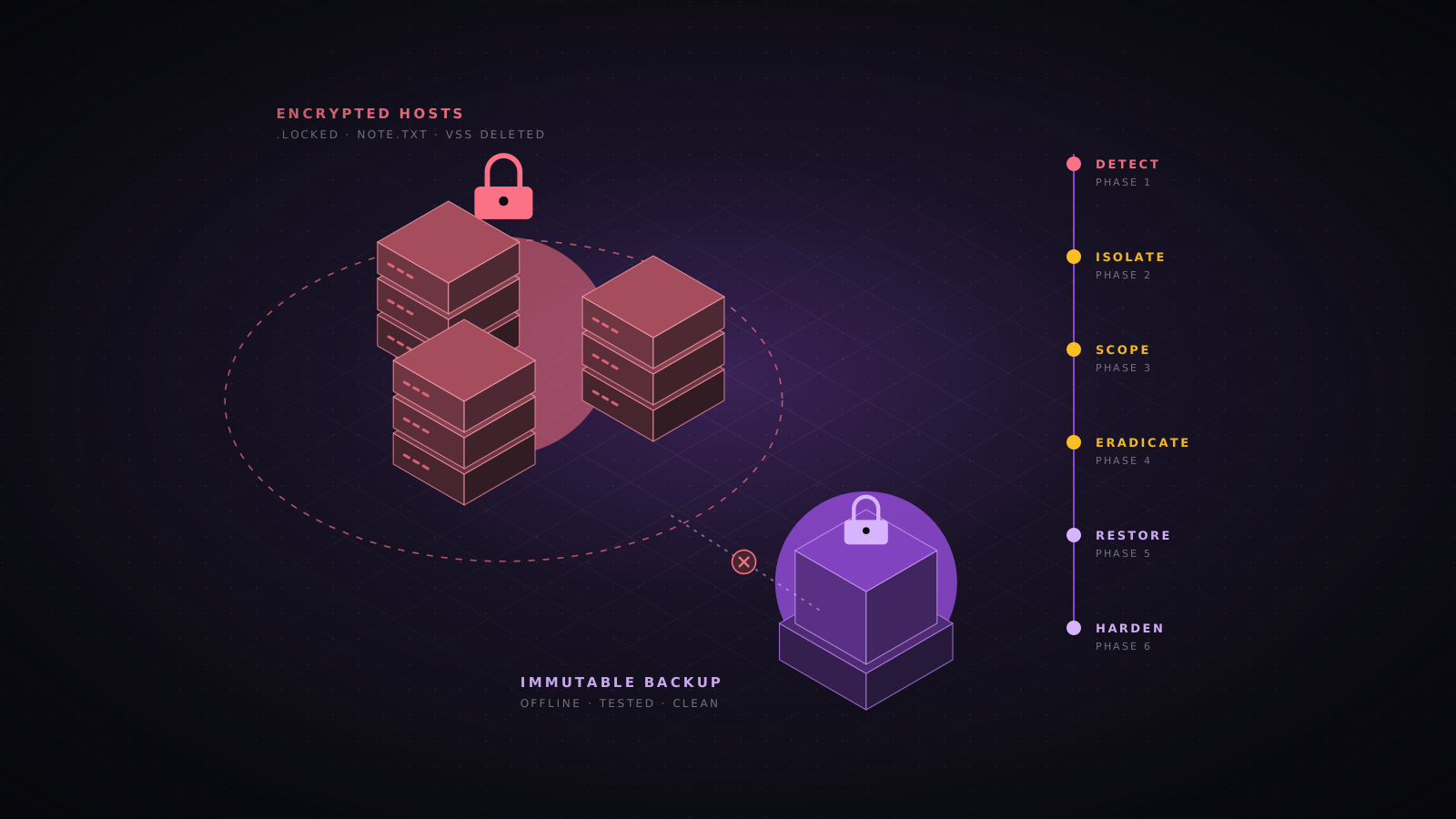
Encrypt at rest and in transit, but also ask who can read the plaintext. Classify data, keep the most sensitive sets in separate stores with separate keys, and make backups immutable and offline so ransomware cannot reach them.
Designing layers that fail independently
Layers only add depth if they do not share a failure mode. Five controls that all trust the same single sign-on session are, in practice, one control. When you review a design, trace a realistic attack and check that each layer would stop it for a different reason.
- Separate the credentials that protect each layer; an admin token for the cloud console should not also unlock production databases.
- Avoid putting one vendor or one agent on every layer, so a single bug or outage cannot disable them all.
- Prefer controls that fail closed: if the policy service is down, access is denied rather than allowed.
- Assume breach in every design review: start from "this server is compromised" and ask what still holds.
Detection is a layer too
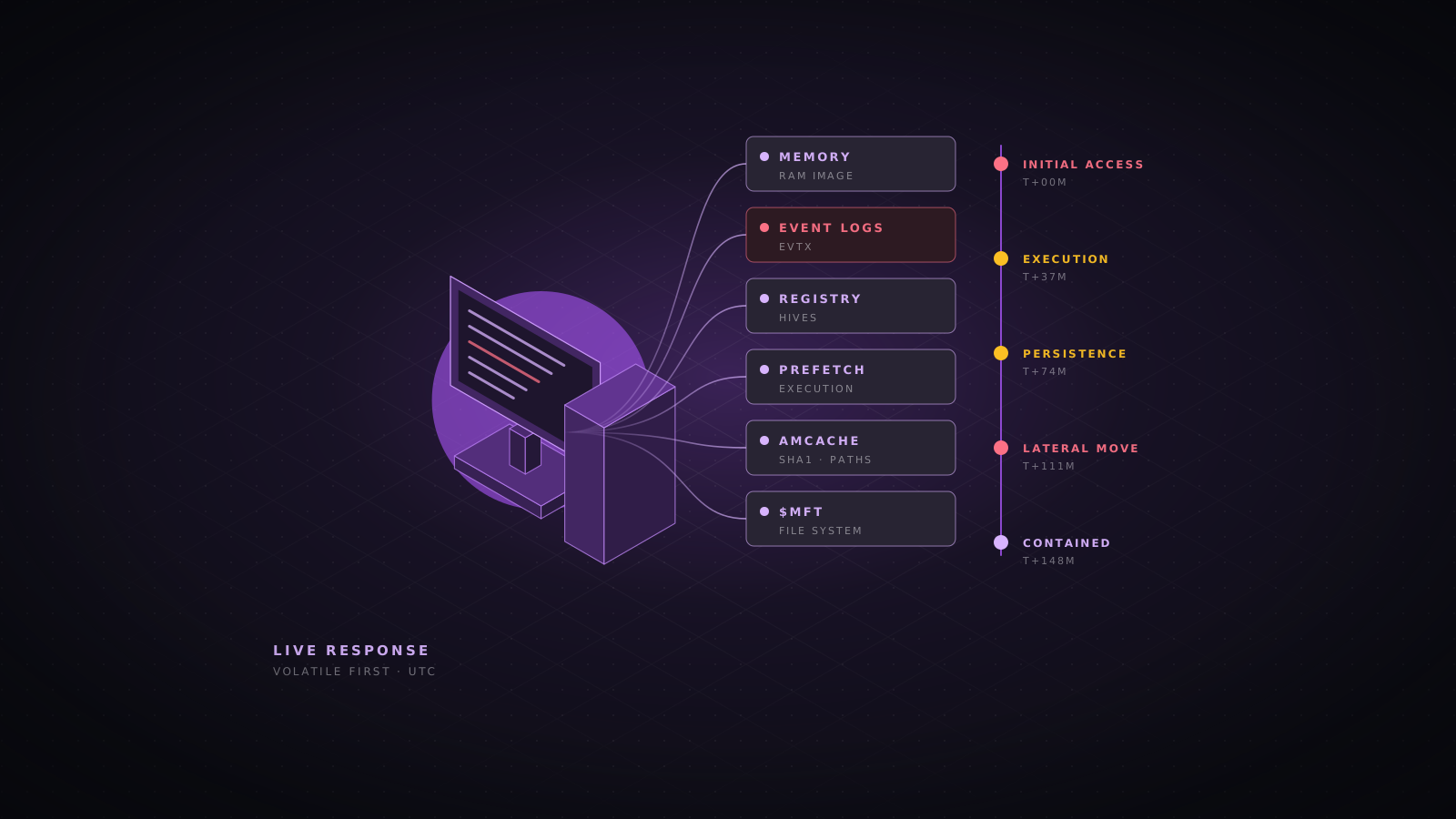
Prevention buys time; detection and response decide how that time is spent. Centralize logs from identity, endpoints, cloud control planes and applications, and alert on behavior rather than signatures alone. Mapping your detections to the MITRE ATT&CK framework is a practical way to see which attacker techniques you would actually notice, and which would go unseen.
Measure it. Mean time to detect and mean time to contain are the numbers that tell you whether your layers are working together or just existing side by side.
Where teams go wrong
- Buying tools instead of designing controls, and ending up with overlapping products that share the same blind spot.
- Leaving one layer, usually identity, as the single point of failure for all the others.
- Never testing the layers: controls that have not been exercised by a penetration test or red team often do not work as drawn.
- Generating alerts no one triages, which turns a detection layer into noise.
A practical starting checklist
- Inventory your critical assets and the paths that lead to them.
- Roll out phishing-resistant MFA, starting with administrators and remote access.
- Segment production from corporate networks and restrict outbound traffic.
- Patch internet-facing systems first, prioritizing vulnerabilities known to be exploited.
- Make backups immutable and rehearse a restore.
- Centralize logs and agree who responds, and how fast, when an alert fires.
- Validate the whole stack with an adversarial test at least once a year.
Defense in depth is not about perfection at any single layer. It is about making sure that when something fails, and something will, the failure is contained, noticed, and recoverable.
- Defense in depth
- Security architecture
- Assume breach